
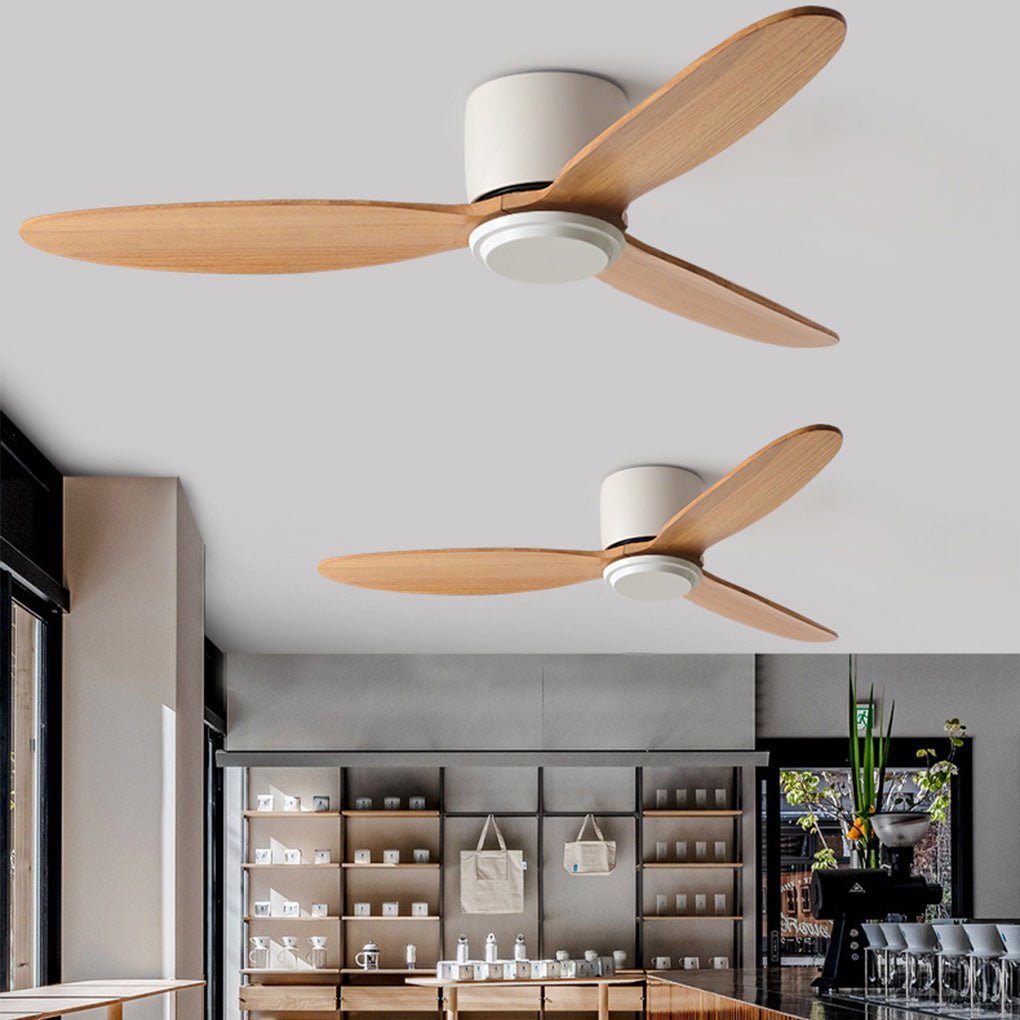
Replacing a ceiling fixture sounds simple until you start comparing fan diameters, mounting heights, blade styles, motor types, and built-in lighting. Many homeowners focus on appearance first, only to discover that the fan feels too small, hangs too low, produces distracting noise, or leaves the room darker than expected.
The best choice starts with the way the room is actually used. A bedroom has different airflow and noise requirements than a large living room, while a space with limited electrical wiring may benefit from combining two functions in one fixture. Before ordering anything, work through the following practical decisions.
Start With the Room’s Main Problem
Ask what you are trying to improve. Is the room uncomfortable during warm weather? Does air remain trapped near a vaulted ceiling? Are you replacing an unattractive central light? Or do you need better air circulation without adding another visual focal point?
If airflow is the main concern and the room already has effective recessed lights, lamps, or wall fixtures, a fan without an integrated light may create the cleanest result. Homeowners can compare different blade configurations and mounting styles among modern ceiling fans without making the fan responsible for the room’s illumination.
If the existing ceiling box is the room’s only central electrical location, a combined fixture may be more practical. A fan with an integrated light can improve circulation and general visibility without requiring separate ceiling installations.
Decide Whether the Fan Must Be the Main Light
A common mistake is assuming that every integrated fan light can illuminate an entire room. Some provide strong ambient light, while others are designed to create a softer glow. Check the lumen output whenever it is available instead of relying only on wattage or product photos.
For bedrooms and family rooms, dimming can be especially useful. Bright light may be needed for cleaning, getting dressed, or working, but a lower setting feels more comfortable before bedtime or during television viewing. Adjustable color temperature can also help the fixture coordinate with existing lamps and recessed lights.
When one ceiling location needs to handle both jobs, explore ceiling fans with lights that allow the fan and LED functions to operate independently. You should be able to use the breeze without turning on the light and illuminate the room when the fan is stopped.
A fan with an integrated light can provide airflow and ambient illumination from one ceiling location.
Match the Fan Diameter to the Usable Space
A larger room does not automatically require the largest fan available. Consider the actual area where people spend time. An open living room may connect to a dining area, but the fan might only need to serve the seating zone. Conversely, a small room with an unusual shape may have weak airflow if the fan is positioned too far from the occupied area.
Review the manufacturer’s recommended room size and airflow information. Fan diameter describes the total blade span, but blade pitch, motor performance, and overall design also affect how much air the fixture moves. Two fans with the same diameter may perform differently.
Before purchasing, mark the fan’s diameter on the floor with painter’s tape or measure outward from the proposed ceiling location. Check that the blades will maintain the clearances required by the manufacturer and local building rules.
Consider Ceiling Height and Mounting Type
Ceiling height can quickly eliminate otherwise attractive options. Low ceilings usually require a flush-mount or low-profile design that keeps the blades safely above the occupied space. A decorative fixture with a long downrod may look appealing online but feel intrusive when installed in a standard-height bedroom.
Tall or vaulted ceilings often need a downrod so the fan can move air through the part of the room where people actually sit and walk. Mounting a fan too close to a high ceiling can reduce the breeze felt below. For sloped ceilings, confirm that the canopy, downrod, and mounting hardware are rated for the ceiling angle.
Do not estimate the final drop from the product height alone. Include the canopy, downrod, motor housing, light, and any decorative elements when calculating the fixture’s lowest point.
Pay Attention to Noise, Not Just Airflow
Motor noise that seems minor during the day can become frustrating in a quiet bedroom or home office. Look for information about motor type, speed settings, and quiet operation. DC motors are commonly chosen for bedrooms because they can provide multiple speed options with relatively quiet and efficient performance.
Installation quality matters as well. A properly designed fan can still wobble or click if the electrical box is not fan-rated, the mounting bracket is loose, or the blades are unbalanced. A clicking sound may also come from a wire, pull chain, or decorative part touching the moving housing.
If quiet operation is a priority, avoid judging a fan solely by its appearance. Read the specifications, confirm the type of control system, and check whether replacement parts are available.
Choose Controls That Fit Daily Habits
Think about how you will operate the fixture from the bed, sofa, doorway, or desk. A remote control is convenient, but it should have a logical storage location. Wall controls are harder to lose, while smart controls may be useful when the fan is installed in a large room or high ceiling.
Check whether the light and fan speed can be adjusted separately. Other helpful functions may include timers, reversible rotation, multiple speed settings, light dimming, and saved settings. However, additional features only add value if they are easy for everyone in the household to understand.
If you plan to use an existing wall dimmer, verify compatibility first. A standard light dimmer should not automatically be assumed safe for controlling a fan motor or integrated LED driver.
Coordinate the Fan With the Room
A ceiling fan occupies a large visual area even when its motor housing is small. Match its scale and materials to the architecture rather than trying to make it disappear completely. Natural wood blades can soften a modern room, while white low-profile designs blend easily with light ceilings. Black finishes create stronger contrast and can relate to window frames, cabinet hardware, or furniture legs.
The fan does not need to match every finish. Repeating one or two elements—such as a wood tone, metal color, or rounded form—is usually enough to make it feel intentional.
Confirm the Ceiling Box Before Installation
A ceiling fan is heavier and produces more movement than an ordinary light fixture. The electrical box and supporting structure must be rated for fan installation. Reusing a standard light box without checking its rating can create a serious safety problem.
Before installation, confirm the fixture weight, ceiling construction, wiring, mounting method, and required clearances. If you are replacing a light with a fan, or if the wiring and support are uncertain, have a qualified electrician inspect the location. Outdoor installations require additional attention to damp or wet location ratings.
Make the Choice Based on the Whole Room
Choose a fan without a light when the room already has a successful layered lighting plan and you want a simpler ceiling. Choose a fan with a light when the central ceiling location must provide both airflow and general illumination.
In either case, prioritize correct scale, safe mounting height, quiet performance, and controls that suit your routine. A ceiling fan is used too often to be selected only as decoration. When airflow, lighting, and installation are planned together, it becomes a home improvement that makes the room more comfortable every day.
