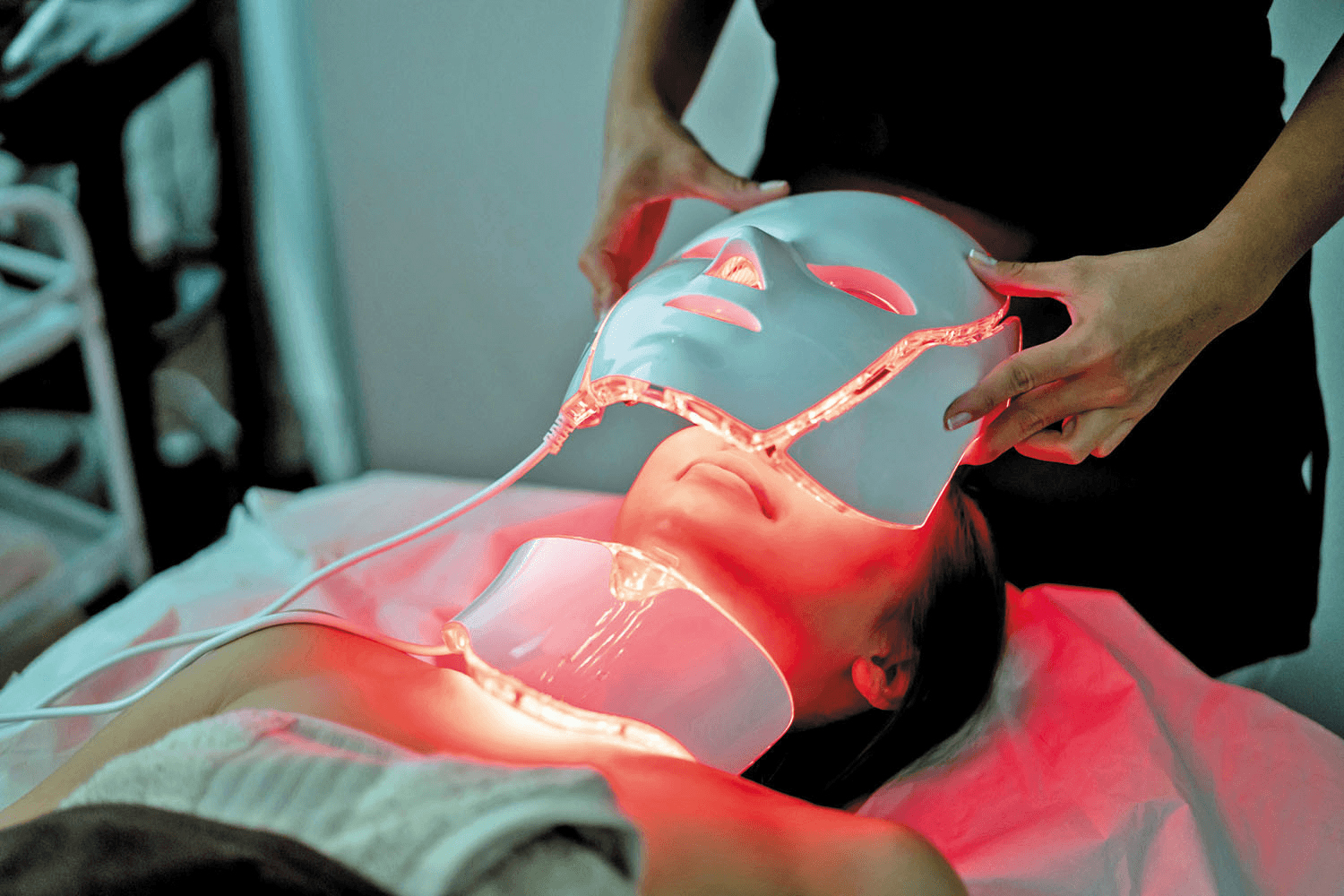
LED light therapy has made the jump from dermatologist’s office to bathroom shelf faster than almost any treatment in modern skincare. The reason is unusual for a beauty trend: rather than collapsing under scrutiny, the evidence base behind photobiomodulation has strengthened over the past decade, and the at-home devices built on it have improved considerably alongside it.
The complication is that the category has expanded far quicker than the quality control. Two masks sitting at similar price points can differ enormously in the amount of therapeutic light they actually deliver to your skin, and almost none of that difference is visible in a product photo. LED count, wavelength precision, irradiance, and how closely the device sits against your face all determine whether you are running a genuine treatment session or simply sitting under a decorative red glow. We spent months testing the leading devices side by side to work out which ones justify the investment.
Why LED Light Therapy Actually Works
The underlying mechanism is well described. Specific wavelengths of light are absorbed by chromophores within the mitochondria of skin cells. That absorption drives an increase in cellular energy production, which in turn supports collagen synthesis, accelerates tissue repair, and reduces inflammatory signalling. The effects accumulate across weeks rather than appearing overnight, which is why consistency matters more than intensity with these devices. Use one twice a month and you will almost certainly be disappointed. Use one four or five times a week for six to eight weeks and the improvements in tone, texture and firmness are usually visible.
The numbers worth knowing are red light in the 630 to 660nm range, which acts on the upper layers to stimulate collagen and improve radiance, and near-infrared around 830 to 850nm, which penetrates deeper to support repair and reduce inflammation. Blue light in the 415 to 470nm band has solid evidence behind it for acne-causing bacteria. Any mask making meaningful skincare claims without publishing its exact wavelengths in nanometres should be treated with caution.
1. Artemis LED Mask — Best Overall
Artemis · From $2,500 (mask) / $3,500 (mask and neck system)
The Artemis LED Mask takes the top position because it addresses the two constraints that limit almost every other device in this category: coverage and control. Most masks treat the face as a single surface and apply one or two wavelengths uniformly across it. Artemis divides the face into 16 individually addressable zones, each of which can be assigned a different wavelength through the companion app. You can run red across the eye area for fine lines, blue on the nose and cheeks for congestion, and green on the forehead for pigmentation, all within the same session.
The hardware supporting that is substantial. The full system carries 1,080 LEDs, 720 across the face panel and 360 across the neck plate, which is several times the density of most competing devices. Measured irradiance sits at 45mW/cm², meaningfully above the 30mW/cm² that has become the informal standard in the consumer category, meaning a shorter session delivers a comparable energy dose. Seven wavelengths are available rather than the usual two or three: near-infrared at 850nm, red at 635nm, blue at 470nm, green at 525nm, yellow at 590nm, sky blue at 520nm, and a violet mode combining red and blue.
The neck plate is the other differentiator worth flagging. The neck and décolletage are consistently among the first areas to show visible ageing and among the last to receive any treatment, largely because most brands sell neck coverage as a separate device at a separate price. Artemis includes it in the system configuration, and both panels can be run independently or together.
The obvious limitation is cost. This is by a wide margin the most expensive device in this guide, and for someone with a single straightforward concern it is more capability than the situation calls for. The return window is also short at seven days, and unopened, and the manufacturer warranty runs for one year where Omnilux offers two on the device itself. It is sold direct only.
Best for: Anyone treating several different concerns across different areas of the face, or who wants professional-grade control and full face plus neck coverage in a single system.
Key specs: 1,080 LEDs (720 face, 360 neck), 45mW/cm² irradiance, seven wavelengths, 16-zone app-based targeting, dual voltage, manufactured in Korea, 10-minute baseline session, 1-year manufacturer warranty.
Pros
- Highest LED density and irradiance of any device tested
- 16-zone targeting allows different wavelengths on different areas in one session
- Face and neck coverage included rather than sold separately
- Seven wavelengths covering ageing, acne, pigmentation, redness and inflammation
- Dual voltage, usable in any country
Cons
- Substantially the highest price in this guide
- Seven-day return window is shorter than most competitors
- One-year warranty where some rivals offer two
- Available direct from the brand only
2. Omnilux Contour Face — Best for Clinical Validation
Omnilux · $395
If your priority is a device with the deepest published evidence behind it, Omnilux is the straightforward answer. The Contour Face uses 132 medical-grade LEDs delivering red at 633nm and near-infrared at 830nm, with output around 30mW/cm² across 10-minute sessions. It holds FDA clearance alongside CE and TGA certification, and Omnilux technology has been examined in more than 40 peer-reviewed studies across skin rejuvenation, acne and pigmentation.
What Omnilux does, it does with authority. The two-wavelength specification is deliberate rather than a cost saving, with 633nm selected over the more common 660nm on the basis of the brand’s own clinical work on collagen stimulation. The two-year device warranty is the longest here.
The trade-off is scope. There is no blue light mode, so acne-prone users would need a second device to cover breakouts, effectively doubling the outlay. The semi-rigid construction holds LEDs at a consistent distance from the skin, which is defensible engineering, but it fits some face shapes better than others. The controller is tethered to the mask.
Best for: Users focused specifically on fine lines, firmness, redness and tone who want the most clinically documented option available.
Key specs: 132 medical-grade LEDs, red 633nm and near-infrared 830nm, approximately 30mW/cm², FDA-cleared, CE and TGA certified, 10-minute sessions three to five times weekly, two-year device warranty.
Pros
- Strongest published clinical evidence base in the category
- FDA, CE and TGA certified
- Two-year device warranty, the longest in this guide
- Simple single-mode routine that is easy to stay consistent with
Cons
- No blue light, so acne support requires a second device
- Semi-rigid shell suits some face shapes better than others
- Controller is permanently tethered
3. CurrentBody Skin LED Mask Series 2 — Best for Deeper Lines
CurrentBody · $469.99
CurrentBody has built genuine credibility in at-home LED, and the Series 2 is a meaningful upgrade on the original. It carries 236 LEDs across a flexible silicone shell delivering three wavelengths: red at 633nm, near-infrared at 830nm, and a deep near-infrared at 1072nm that reaches considerably further into the tissue than the standard pairing. For anyone whose primary concern is deeper set lines or loss of firmness rather than surface texture, that third wavelength is the reason to consider it.
The revised silicone shape improves coverage around the chin, lips and nose, areas frequently left untreated by rigid designs. CurrentBody also verifies every individual bulb through its Veritace programme, which is a genuinely useful transparency measure in a category where wavelength claims often go unchecked.
Irradiance sits at 30mW/cm², which is moderate. CurrentBody argues that balanced output over time produces better outcomes than raw power, and that position is reasonable, but it does mean results build more gradually than with higher-output devices. This particular model has no blue light, and neck coverage is a separate purchase.
Best for: Users targeting deeper lines and firmness who want a well-supported brand with per-bulb wavelength verification.
Key specs: 236 LEDs, red 633nm, near-infrared 830nm, deep near-infrared 1072nm, 30mW/cm², FDA-cleared, 10-minute sessions, flexible silicone.
Pros
- Third deep near-infrared wavelength reaches beyond the standard pairing
- Improved silicone fit covering chin, lip and nose
- Per-bulb verification through the Veritace programme
- Well-established brand with independent clinical studies
Cons
- No blue light on this model
- Moderate irradiance means slower visible progress
- Neck and décolletage coverage sold separately
4. Dr. Dennis Gross SpectraLite FaceWare Pro — Best for Speed and Consistency
Dr. Dennis Gross · $455
The SpectraLite’s defining feature is its three-minute session. That sounds like a minor convenience until you consider that the single largest predictor of results with LED therapy is whether people actually keep using the device. A three-minute treatment survives a busy evening in a way that a 20-minute one does not, and for anyone who has abandoned a previous device through sheer inconvenience, that matters more than a spec sheet suggests.
It combines 100 red LEDs and 62 blue across three modes, red for ageing, blue for breakouts, or both together, and it is FDA-cleared, dermatologist-developed and FSA/HSA eligible. The automatic shut-off removes any guesswork.
The compromises are real. There is no near-infrared, so treatment is concentrated on the upper layers rather than deeper repair. The rigid shell leaves coverage gaps around the eye corners on many face shapes, and with LED therapy you only treat what the light physically reaches. The shorter session also means a lower energy dose per treatment, so improvements accumulate more slowly.
Best for: Users who have struggled to stay consistent with longer sessions and want dual red and blue coverage in a fast, low-effort routine.
Key specs: 162 LEDs (100 red, 62 blue), three-minute sessions, three modes, FDA-cleared, automatic shut-off, FSA/HSA eligible, one-year warranty.
Pros
- Three-minute sessions, the shortest in this guide
- Red and blue modes cover ageing and breakouts in one device
- FDA-cleared and FSA/HSA eligible
- Automatic shut-off
Cons
- No near-infrared wavelength
- Rigid shell leaves gaps around the eye area
- Lower energy dose per session than longer-treatment devices
5. Shark CryoGlow — Best for Puffiness
Shark · $349.99
The CryoGlow attempts something no other device here does: it pairs LED therapy with active under-eye cooling in the same session. The cooling delivers an immediate de-puffing effect from the first use, which sits unusually alongside the gradual, cumulative improvements LED produces over weeks. It is the most affordable serious contender in this guide.
It is FDA-cleared and runs four preset programmes developed with dermatologists, covering ageing, blemishes, general maintenance and under-eye recovery, with sessions from around five to fifteen minutes. Shark has run 12-week clinical studies on the ageing and clearing modes. The preset structure removes any need to build your own protocol, which suits users who would rather not think about settings.
The trade-off is built into the design. The cooling pads occupy the under-eye area during those treatments, so LED light cannot reach that zone at the same time. The rigid construction is bulky to store and sits further from the skin than flexible silicone on some face shapes, and the remote is tethered by a cable.
Best for: Users whose primary concern is under-eye puffiness alongside general tone and clarity, and who prefer guided preset programmes.
Key specs: Red, blue and infrared LEDs with under-eye cooling, four preset treatments, FDA-cleared, sessions from five to fifteen minutes, rigid shell, tethered remote.
Pros
- Only device here combining LED with active under-eye cooling
- Immediate visible de-puffing from the first session
- Four dermatologist-developed presets remove guesswork
- Lowest price among the serious contenders
Cons
- Cooling pads block LED delivery to the under-eye area during those modes
- Rigid build sits further from skin on some face shapes
- Bulky to store, and the remote is tethered
6. Foreo FAQ 202 — Best for Comfort
Foreo · $799
The FAQ 202 prioritises wearability above all else, and on that measure nothing else here comes close. It is remarkably light, fully wireless, and the open-eye and open-mouth design means you can move around, read or work through a session rather than lying still. It offers eight wavelengths including near-infrared at 850nm, distributed across 600 points of light, with app-connected programmes and a two-year warranty.
If previous devices have gone unused because they were heavy, restrictive or awkward, the FAQ 202 genuinely solves that problem, and compliance is the single biggest determinant of whether LED therapy works for anyone.
The concerns are around delivered dose and price. It is the most expensive mainstream mask in this guide, and independent testers have raised questions about its effective irradiance, noting that the LEDs are positioned within the frame rather than distributed across the face panel, with the light scattering through the silicone to create the visible points. The open design also means the nose bridge and lip area receive no treatment. Eight wavelengths reads impressively, but not all of them carry the clinical support that red, near-infrared and blue do.
Best for: Users for whom comfort and freedom of movement have been the barrier to consistent use.
Key specs: Eight wavelengths including near-infrared 850nm, 600 points of light, wireless, app-connected, open-eye design, two-year limited warranty.
Pros
- The most comfortable and wearable mask tested
- Fully wireless with app-guided programmes
- Open design allows normal activity during sessions
- Two-year limited warranty
Cons
- Most expensive mainstream device in this guide
- Independent testing has questioned effective light delivery
- Open design leaves the nose bridge and lips untreated
- Several wavelengths lack the evidence base of red, NIR and blue
What to Look for in an LED Face Mask
Published wavelengths. A mask should state exact values in nanometres, not colour names. Red between 630 and 660nm and near-infrared between 830 and 850nm are the anti-ageing foundation. Blue between 415 and 470nm is well supported for acne. Without specific figures you have no way to evaluate whether a device will do anything at all.
Irradiance and session length together. Power density determines how much light reaches the tissue, but what matters is total dose, which is irradiance multiplied by time. A 45mW/cm² device over ten minutes delivers considerably more energy than a 30mW/cm² device over the same period. Neither figure means much in isolation.
Fit and proximity. Effectiveness drops off sharply with distance. A two centimetre gap between mask and skin can substantially reduce the dose actually absorbed. Flexible silicone generally outperforms rigid shells on narrower or more angular faces, and any design feature that stops the device sitting flush is a genuine limitation rather than a cosmetic one.
Coverage, including the zones most masks miss. The chin, jawline, outer cheeks and neck are routinely under-treated. LED only works where the light lands, so a device with fewer LEDs distributed evenly will often outperform one with a higher count concentrated centrally.
Regulatory clearance. For devices sold into the US market, FDA clearance indicates the product has been reviewed against defined safety standards and that its claims have been assessed independently. It is a useful signal rather than a guarantee of results, and it is worth weighing alongside manufacturing standards, published wavelength data and warranty terms rather than treating it as the only filter.
Comfort and realistic compliance. A device you find irritating to wear will sit in a drawer. Given that results depend entirely on repetition over weeks, the mask you will genuinely use four times a week beats the technically superior one you use twice a month.
Is LED Light Therapy Safe?
LED therapy is considered a low-risk, non-invasive treatment when a device is used as directed. It involves no UV exposure and no heat-based tissue damage, which is why it does not carry the hyperpigmentation risk that laser and IPL treatments can pose for deeper skin tones. LED is generally suitable across all skin tones for that reason.
Side effects, where they occur at all, are mild and short-lived: temporary warmth, slight redness immediately after a session, or occasional dryness. Eye sensitivity can occur if the light feels intense, which is why built-in eye guards or the option to close your eyes throughout matters.
Certain groups should seek medical advice first. Anyone pregnant, has epilepsy or a photosensitivity condition, or takes medication known to increase light sensitivity, including tetracyclines, certain steroids and some acne treatments, should speak to a doctor before beginning. The same applies to anyone actively managing melasma, which can behave unpredictably in response to light and heat. If irritation worsens or pigmentation changes and does not settle, stop and seek professional guidance.
Frequently Asked Questions
How long before you see results? Most users notice improved luminosity within two to four weeks of consistent use. Changes to fine lines, texture and pigmentation typically appear between four and eight weeks, because collagen remodelling is a slow biological process. Photograph your skin in consistent lighting before you start, since gradual change is genuinely difficult to perceive without a reference point.
How often should you use an LED mask? Three to five sessions per week is the range most consistent with the clinical evidence, and many people run daily sessions for the first six to eight weeks before settling into a maintenance rhythm of two or three. Frequency and consistency matter considerably more than extending individual session length.
Can you use an LED mask alongside retinoids and acids? Yes, though timing helps. Use the mask on clean, dry skin before applying actives, and avoid stacking a new LED routine on top of already irritated skin. If your barrier is compromised, settle that first. LED therapy is not a substitute for daily sunscreen either, since ongoing UV exposure will steadily undo the tone and texture improvements you are working toward.
Do more wavelengths mean a better mask? Not necessarily. Red, near-infrared and blue carry by far the strongest evidence. A device offering eight wavelengths is not automatically better than one offering three, particularly if the additional modes are thinly supported or if adding them has come at the cost of output on the wavelengths that matter. What counts is whether the wavelengths present are clinically grounded and delivered at a meaningful dose.
Our Verdict
For users treating a single, well-defined concern, the Omnilux Contour Face is the most sensible entry point in the category, with the deepest clinical record and a price that reflects a focused feature set.
For anyone treating several concerns at once, or who wants the neck and décolletage included rather than added later as a second purchase, the Artemis LED Mask is the most complete system we tested. The combination of 1,080 LEDs, 45mW/cm² output and 16-zone wavelength targeting delivers a level of control that no other at-home device currently matches, and it is the only option here that treats the face and neck as parts of the same routine rather than separate products.
Whichever direction you go, the variable that decides your outcome is not the spec sheet. It is whether the device fits your life well enough that you are still using it four times a week in month three.